V&A East Storehouse gems revealed by editors
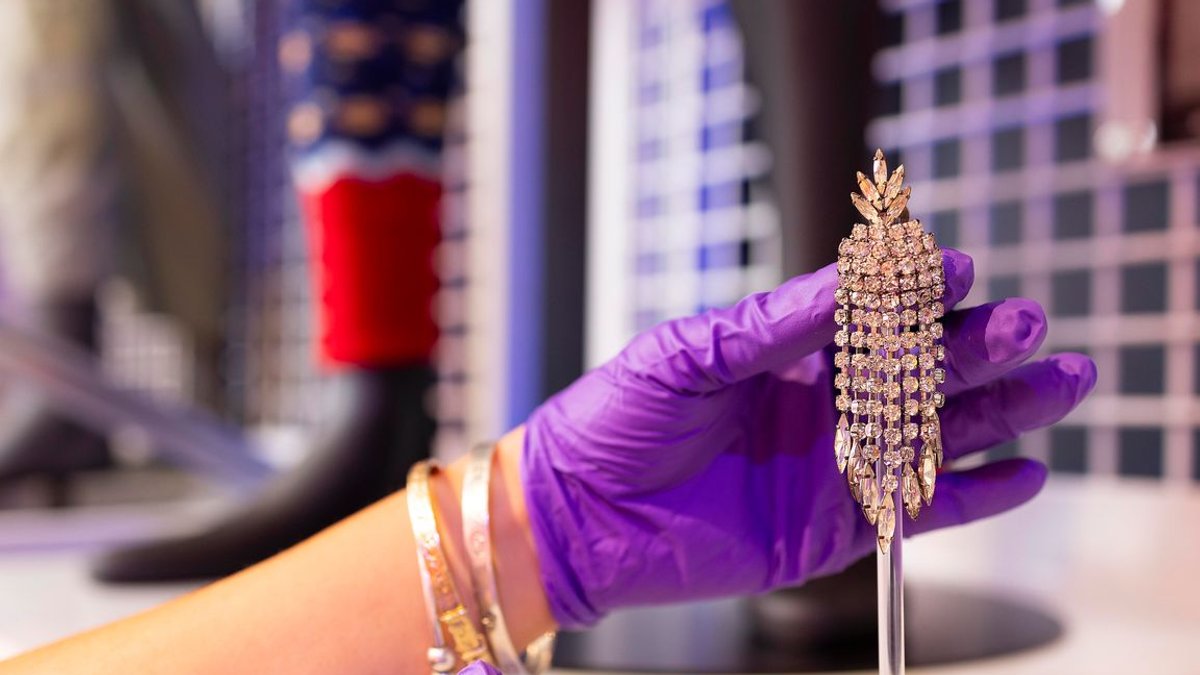
The Victoria and Albert Museum’s newest location, V&A East Storehouse in east London, allows visitors to handle objects typically kept behind glass.
The Order an Object service sits at the heart of this experience. Visitors reserve appointments online and choose up to five items from the museum’s archives for personal examination. Demand for popular pieces, particularly those from the David Bowie archive, often means waiting months. Availability also depends on whether an item has been recently viewed or reserved by someone else.
The gloves come on, the archive comes alive
Inside the Storehouse, visitors receive purple latex gloves before being guided to a study table. There, selected objects—such as a 19th-century woodblock print, a punk-era scarf, or a 1959 Dieter Rams radio—are presented for close inspection. Staff supervise handling to protect fragile materials, and some pieces require rest periods between viewings.
Tilly Wheeler, a commerce writer, called her visit “surprisingly visceral.” She examined five of Bowie’s costumes from the early to mid-1970s, including the quilted Liberty-print suit worn during his Top of the Pops performance of Starman. The garment showed signs of wear—cigarette burns and frayed seams—making the moment feel like a direct link to history.
The Bowie collection has drawn the most requests so far. The entire archive, donated to the museum, includes costumes, handwritten lyrics, and photographs, much of which isn’t displayed permanently. Rotating exhibitions offer glimpses, but the Order an Object service provides access to pieces that would otherwise stay in storage.
From puppets to shellwork: what staff want to see
Other team members shared their wish lists. Arabella Bowes, a commerce editor, wants to explore the theater collection, specifically a pair of puppets: an 1870s marionette with real human hair and a 1970s vegetable-seller puppet. She hopes to compare how craftsmanship changed over time.
Related: Home tile trends that impress
The team also expressed interest in a mahogany box of shells from around 1800. The collection, likely used for decorative work, includes miniature vegetables and flowers made from shells. The box reveals details about the hobby’s past, including the work of “Mr Castle’s Grotto,” a London shop that sold such items.
The Storehouse’s method offers more than access. Objects that feel distant in galleries—protected by glass and lighting—become tangible when held. The service encourages a slower, more thoughtful engagement with history, focusing on curiosity rather than spectacle.
Still, the system has constraints. The booking window, item limit, and need to rest fragile pieces mean not every request can be met. For now, the Storehouse remains an exception in a museum world that usually keeps its treasures out of reach. Whether the approach spreads to other institutions will depend on how well the V&A balances access with preservation.
The museum hasn’t shared plans to expand the service. If current interest continues, the Storehouse may soon face a waiting list as extensive as its collection.
For those interested in how such personal touches can transform a space, similar principles apply when clearing homes of negative energy for high-profile clients.

Clearing homes of negative energy for celebrities


