Drought-Tolerant Plants for a Hot Summer
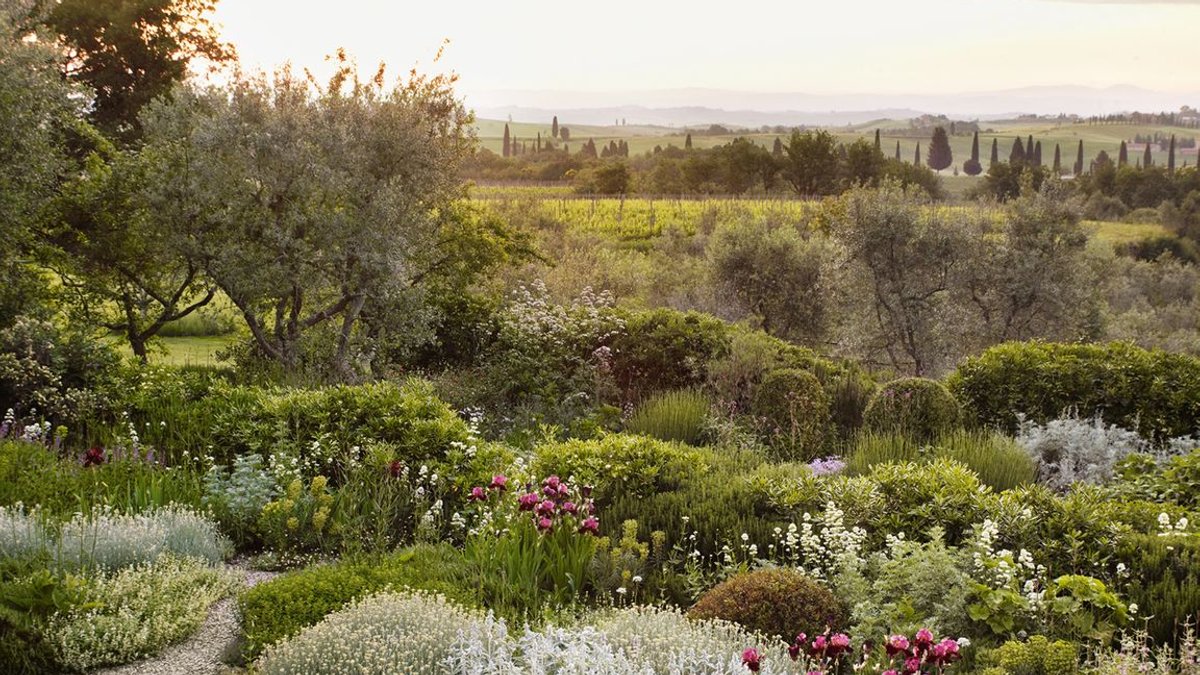
Drought-tolerant plants help keep gardens alive during dry periods. Many species survive conditions that would wither less hardy plants, requiring little water once established. Gardeners seeking to maintain their borders through high temperatures should consider a mix of reds, blues, and architectural shapes.
Red blooms for the hottest days
Poppy varieties are particularly effective for hot weather. Eschscholzia californica ‘Orange King’ blazes with tangerine colour, while Papaver commutatum ‘Ladybird’ and Papaver rhoeas ‘Paradise’ offer sizzling-red blooms. These flowers prefer sun-baked, well-drained soil, with some capable of growing in shingle. The majority can be sown direct in April. For a similar red effect, Linum grandiflorum ‘Rubrum’ is an easy annual flax also sown in April, and Potentilla ‘Gibson’s Scarlet’ is a perennial for the front of the border, plantable in autumn or spring.
Related: V&A East Storehouse gems revealed by editors
Deeper red tones are provided by Dianthus cruentus, the long-stemmed blood pink. It sends up clusters of crimson flowers above grassy foliage and looks striking growing through gravel. Good colour foils for these reds include lime greens like Euphorbia myrsinites and blues such as Delphinium grandiflorum ‘Blue Butterfly’, which can be grown from seed in autumn or spring. Hot pinks like Lychnis coronaria, a short-lived perennial with downy silver foliage, also pair well with red tones.
For larger scale interest, Verbascum bombyciferum (biennial mullein) produces 1 to 2-metre candles of sulphur-yellow flowers from a rosette of furry grey leaves. The late gardener Christopher Lloyd named the cultivar ‘Christo’s Yellow Lightning’ after an old donkey. Another architectural choice is the cardoon (Cynara cardunculus), which produces big thistle-like heads of purple flowers atop a 2 to 2.5-metre plume of silver leaves. The fennels also offer impact, with bronze forms like Foeniculum vulgare ‘Smoky’ offering lacy copper foliage and the giant fennel (Ferula communis) capable of producing a 3-metre tower of sunshine-yellow umbels.
Structural plants and pollinator allies
Architectural spheres of flowers, such as Echinops ritro, send up a sea of electric-blue golfballs and can be planted in autumn or spring. A wide range of alliums are available, including the 2-metre leggy ‘Summer Drummer’ and the football-sized Allium schubertii, which looks like an exploding firework at the front of the border. Phlomoides tuberosa (syn. Phlomis tuberosa) ‘Amazone’ features clumps of lilac-pink blooms dotted up 1.5-metre upright stems. These plants mature into impressive seedheads, providing structure and interest through autumn.
Related: Discover Exceptional Seafood Dining at Cut The Crab
Aromatic Mediterranean plants are highly tolerant of drought and high temperatures. Several – including lavender, rosemary, cistus, and curry plant (Helichrysum) – are evergreen shrubs best planted in early autumn or spring. Pinks like ‘Devon Wizard’ are ideal for the front of a gravel border and will release a clove perfume in sheltered sun. If space allows, the Australian mimosa (Acacia dealbata) makes a large shrub or medium-sized tree, morphing into a wondrous cloud of yellow pom-pom flowers in late winter that perfume the air into spring. While fussy in colder regions, it is a drought-tolerant joy in the right spot.
Gardeners can provide food for pollinators during heat waves by growing nectar powerhouses that thrive with minimal moisture. Butterflies flock to the honey-scented panicles of buddlejas like ‘Royal Red’ and the tall, airy flower clusters of purple top (Verbena bonariensis). Bees will fill the garden with contented humming if you grow lavender, especially forms of Lavandula x intermedia like ‘Sussex’, or nepeta such as ‘Six Hills Giant’. Salvias, including the papery pastel spires of clary (Salvia sclarea), are also partial to bees. Sea hollies (Eryngium) and border stonecrops (Hylotelephium) can go in the ground now, in early summer. Both are drought-proof and will provide nectar in spring and early autumn, as well as splendid seed-heads to adorn the garden through the cold months.

V&A East Storehouse gems revealed by editors


