Remote hotel blends indoors with nature seamlessly
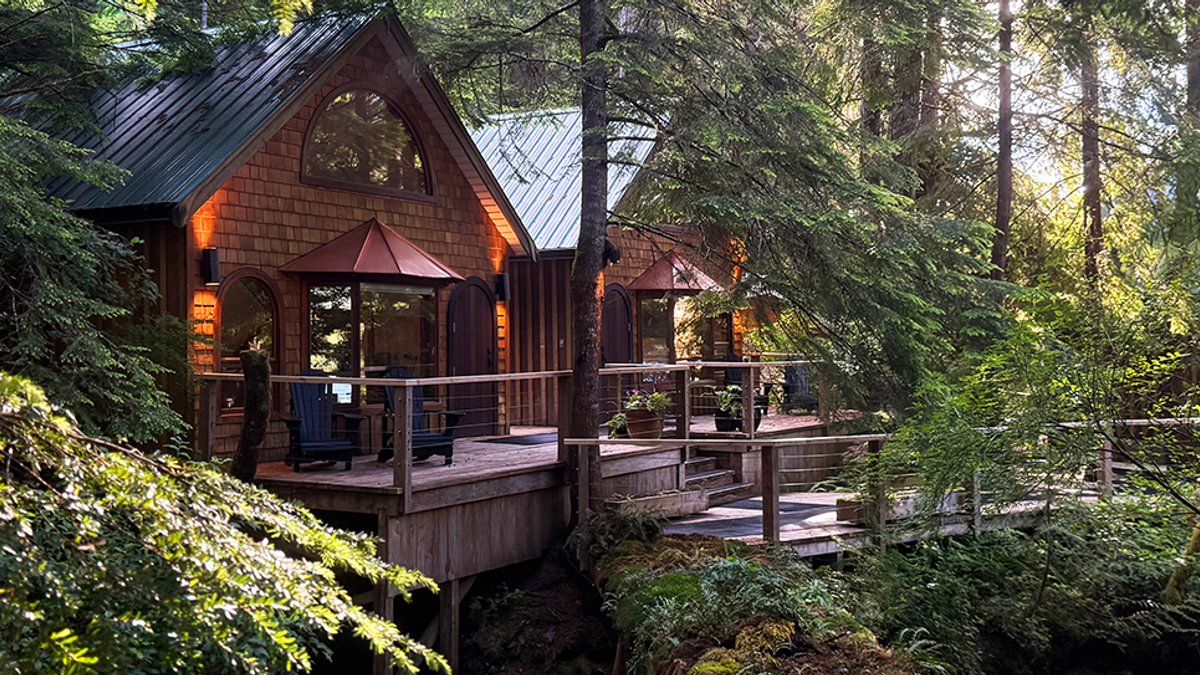
The flight to Nimmo Bay arrives by seaplane, skimming low over British Columbia’s Queen Charlotte Strait before touching down on water. The remote hotel sits along a fragmented coastline, where cabins perch on solid ground, buildings wrap around a central waterfall, and dining spaces float on the water. Owners Fraser and Becky Murray have spent years refining a design that connects indoor comfort with the rugged Pacific Northwest setting.
Fire pits that vanish into the floor
Each evening, fire pits appear on the dock outside the main dining room—only to disappear just as quickly. The Murrays installed them flush with the deck, covered by wooden panels when not in use. Fraser Murray chose this setup over traditional fire bowls, which he says don’t warm feet as effectively when sitting nearby. The design also keeps the space flexible for larger gatherings, allowing the area to shift from cooking surface to lounge to fire pit without obstruction.
“It doesn’t get in the way,” he says. “You can switch it around from cooking to a floor to a fire.”
A roof that feels open but isn’t
An outdoor lounge next to the enclosed dining room balances exposure and protection. Polycarbonate slabs form a transparent roof, shielding guests and furnishings from rain and wind while keeping the sky visible. The space includes worn-in sofas, plush throw pillows, and reading nooks, all built to endure the elements without losing comfort.
Related: Austin home blends planter and entryway seamlessly
“It’s nice to have exposure to the sky at night,” Murray says. “The roof is open, yet protected.” The furniture, left to weather naturally, fits the environment without forcing an outdoor aesthetic.
Vintage finds that ground the space
The Murrays avoided a rustic or technical look, mixing midcentury modern with textural ’70s touches. Vintage Percival Lafer sofas sit alongside shaggy Swedish Rya rugs and rosewood tables from the 1960s. Canadiana pine hutches and chests from the 1800s add warmth to the rooms. Many pieces come from local makers, while others were found in antique shops around Victoria.
“They’re just so well aged and loved,” he says of the older furniture. “There’s something about them that brings you back in time and makes a space feel inviting.” The hotel’s artist residency program also fills rooms with works from artisans in nearby communities like Alert Bay and Tofino.
For those who want to try this at home, Murray suggests using outdoor textiles casually. A flatweave rug from a thrift store can replace a picnic blanket, adding color to a patch of grass or sand. “You can roll it up, walk away, and it’s like you were never there,” he says. A quick spray-down and hang to dry refreshes it.
Related: Clearing homes of negative energy for celebrities
The small details matter as much as the big ones. Nimmo Bay’s approach succeeds because of how the elements work together. The Murrays don’t impose a theme or overcomplicate things. Instead, they let the surroundings guide their choices, whether that means a rug that handles dirt or a fire pit that vanishes when unused. The result feels natural, even if the effort behind it isn’t obvious.
Guests experience the effect without analyzing it. The warmth of the fire at their feet registers before they notice the pit is built into the deck. The open sky is appreciated without consciously thinking about the roof. The design doesn’t call attention to itself—it simply improves the stay.
For those looking to bring similar ideas into their own homes, balancing style and function in every room can start with small, practical changes.

Austin home blends planter and entryway seamlessly


