Tile baseboards trend in modern bathrooms
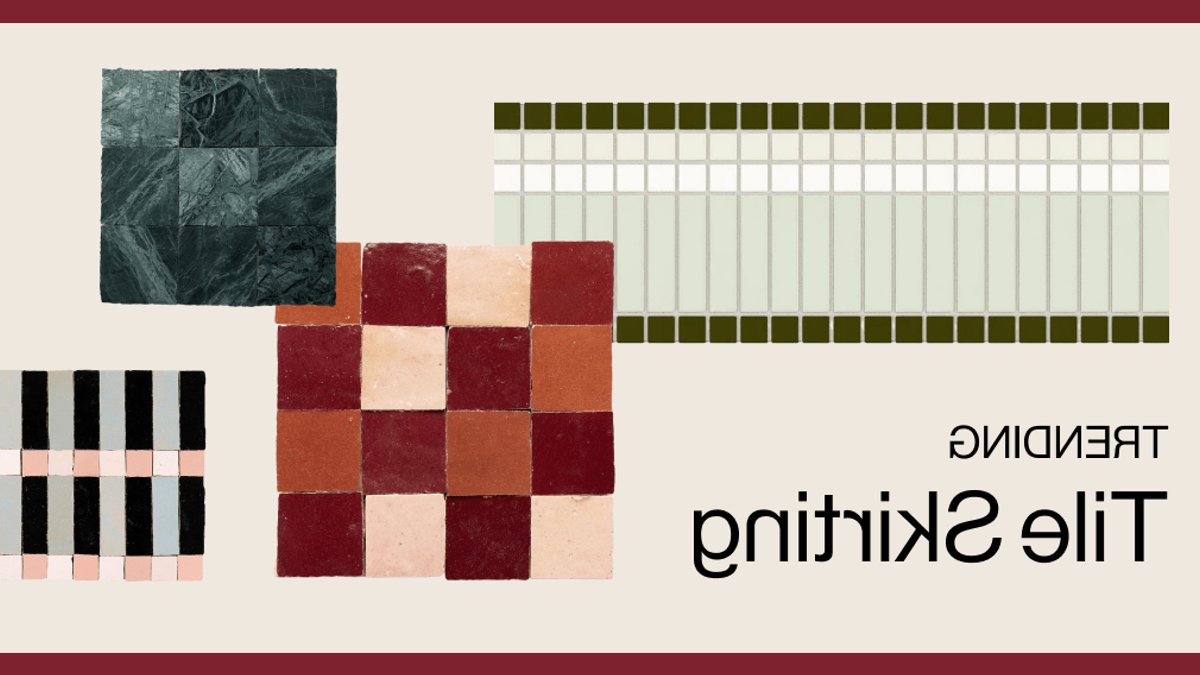
Tile baseboards are replacing wood in bathrooms, turning a once-overlooked detail into a design statement. The change began with a viral kitchen DIY by Berlin content creator Celli Duske, who replaced traditional wood trim with ceramic squares. Designers have since adopted the approach in bathrooms, using tile to unify spaces or add subtle texture.
Tile baseboards offer practical advantages over wood. They resist warping, staining, and repainting. Matching them to floor or wall tiles creates a seamless look, making small bathrooms feel more cohesive. In a Melbourne bathroom by Looks Generous, green floor tiles extend into the baseboards, blurring the line between horizontal and vertical surfaces. The effect remains subtle but intentional, ensuring every part of the room feels considered.
Some designers use tile baseboards to introduce contrast or pattern. In a London row house, Studio Duggan covered the sink backsplash, shower walls, and baseboards in the same checkerboard zellige tile, tying the room together without relying on color. Others experiment with scale, as in a Warsaw pied-à-terre where Dawid Konieczny used red tile in varying sizes to define the shower border.
Homeowners are also testing affordable options. Subway tile, typically used for walls, is now installed horizontally to create low-profile baseboards. In Washington, D.C., designer Zoë Feldman extended rosy-hued subway tile along a bathroom’s perimeter, adding a narrow ledge that serves as a shelf for toiletries. The method works in both modern and traditional spaces, showing tile baseboards adapt to different styles.
Durability stands out as the biggest advantage. Bathrooms endure high moisture, and wood baseboards—even painted—can swell or peel. Tile handles humidity without issues and is easier to clean if installed properly.
Related: U-Shaped Sectional Surprisingly Expands Living Space
The trend reflects a broader change in how people view small details. Baseboards were once purely functional, but they now serve as a way to reinforce a room’s design. Wood remains the default for most homes, yet tile offers a way to make a statement without a full renovation.
Some designers are expanding tile baseboards beyond bathrooms. In an Australian country home, Loopea Design Studio used extra-tall baseboards in a custom pattern to connect stone, wood, and metal. The result feels intentional, as if the baseboards were always part of the design.
Texture is another area of experimentation. Clé’s Lapidary collection includes tiles with rough, unpolished finishes that add depth. Marble-look tiles in deep greens or espressos create a moody, earthy feel, while glossy zellige tiles in soft pinks or creams keep spaces light. The variety is extensive, but the aim remains consistent: making baseboards a considered element rather than a default.
The approach isn’t about eliminating wood. It provides another option—one that’s durable, customizable, and often more visually engaging. In small bathrooms, where details matter, tile baseboards can transform a space from overlooked to polished.
Photography by Traianos Pakioufakis highlights how Looks Generous balanced green tiles for both floor and baseboards, creating a continuous line that guides the eye. The result is simple yet effective, proving even minor details shape a room’s feel.

U-Shaped Sectional Surprisingly Expands Living Space


