Brighten up your lantern with Matisse flair
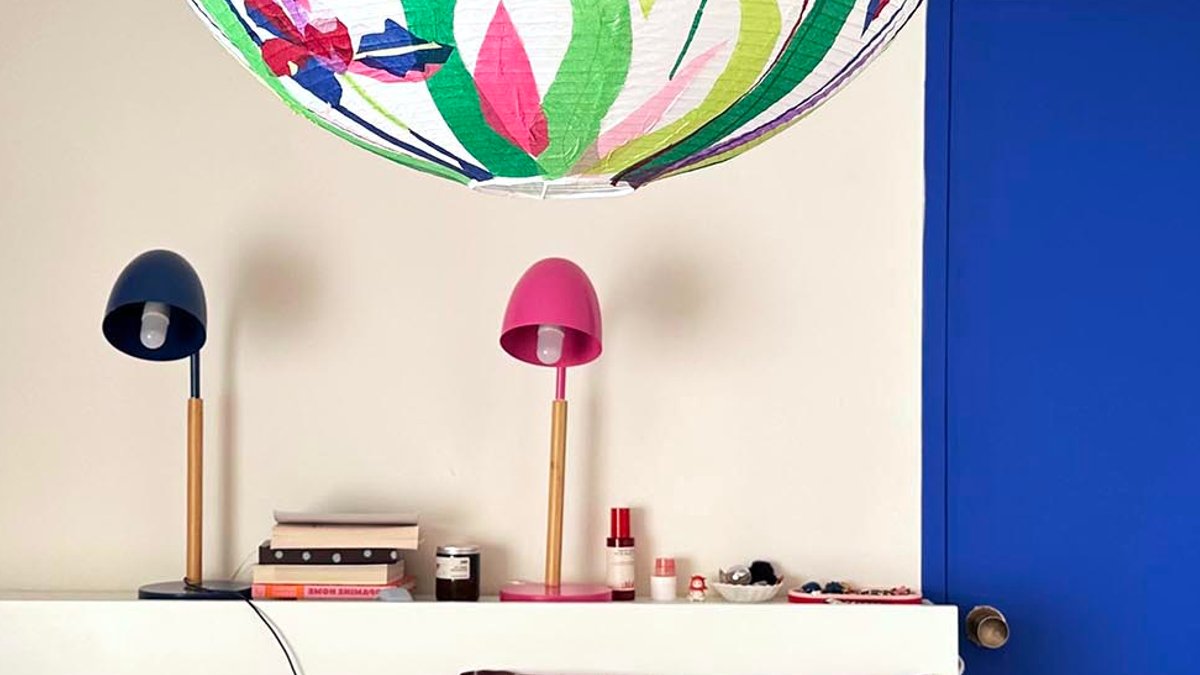
An Austin decorator hung a plain white paper lantern in her kitchen for nearly a year before deciding it needed color. A tissue-paper collage inspired by Henri Matisse transformed the fixture into a glowing centerpiece.
The project starts with a basic paper pendant
Most paper lanterns are simple shades made of parchment or rice paper. They slip over a light bulb and require a separate cord and ceiling hook. Anisa Young and Sydney decorator Valeria decorated their lanterns while the fixtures were already hanging, though the process was physically demanding.
Valeria said working with the lantern in place made it easier to visualize the design. “Since the flowers started from the bottom, standing let me reach everything,” she explained. Young found the experience more difficult. “It was like painting a ceiling,” she said, noting the strain on her shoulders and arms. She now suggests working on a table instead.
Cutting shapes is forgiving for beginners
The decorators skipped strict plans. Young used an X-Acto knife to cut freehand blobs, spirals, stars, and even a snail and a cat. Valeria chose a botanical look, drawing stems inspired by artist Valeria Ganzman’s floral designs before cutting them out with scissors.
Tracing is an option if freehand feels uncertain. A quick search can provide motifs, or shapes can be sketched with a pencil before cutting. Both recommend cutting extra pieces to test placement before gluing. “I just cut whatever came to mind,” Young said. The process is meant to be relaxed.
Related: Elevate your style with cufflinks
Tissue paper is thin enough to let light through, so mistakes disappear when the lamp is on. The real challenge comes during gluing, as the paper tears easily when wet. A gentle touch is essential.
Gluing requires patience and care
Young and Valeria used different techniques. Young applied small dots of glue to the back of each shape before brushing glue over the top. Valeria mixed PVA glue with water for a thinner consistency, then painted it over the tissue. Both methods rely on the glue soaking through the paper to bond it.
Valeria advised using gentle patting motions and avoiding a soaking-wet brush. Rough handling can cause wrinkles or tears. Once dry, the glue keeps the design secure.
The finished lanterns cast colorful patterns when lit. By day, the designs add a playful touch; by night, they create a warm glow. Neither decorator has seen peeling or fading after months of use.
This project thrives on imperfection. The tissue paper’s translucency hides uneven edges or stray glue marks when the light is on. The only rule is to stop when the design feels complete—no measuring, just scissors and glue.

New Zealand kitchen gets storage makeover


